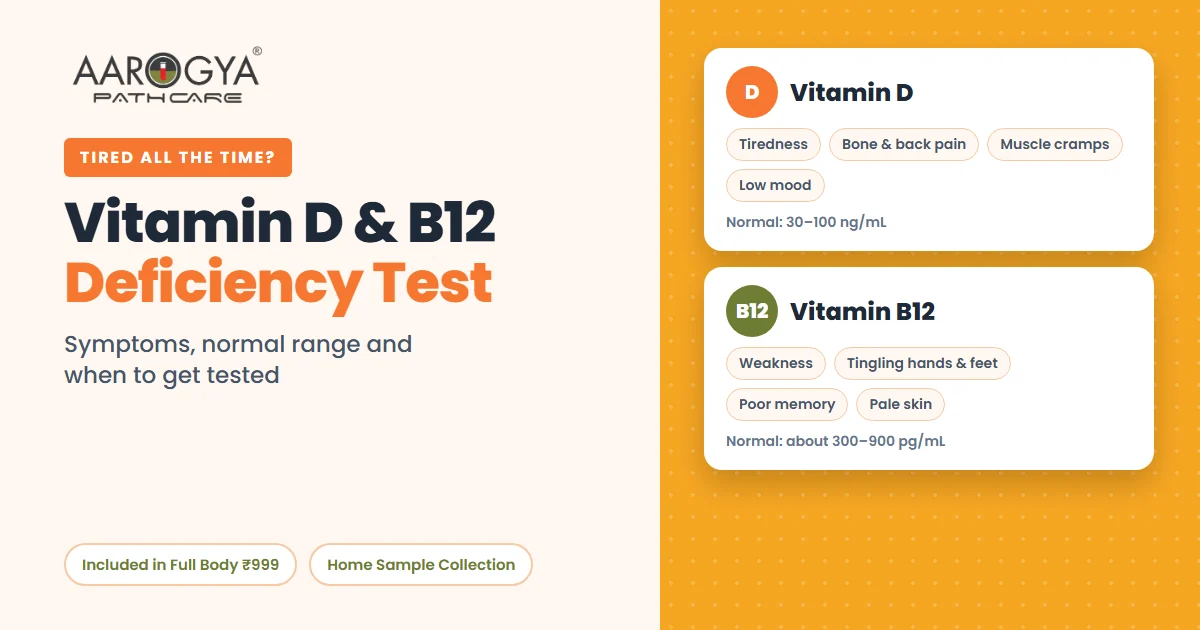
Quick answer: Vitamin D and Vitamin B12 deficiency are very common, especially for people who spend most of the day indoors. Low Vitamin D can cause tiredness, bone and back pain and muscle weakness. Low Vitamin B12 can cause tiredness, tingling or numbness in the hands and feet, and poor memory. A simple blood test checks both. Generally, Vitamin D below 20 ng/mL and Vitamin B12 below 200 pg/mL are considered low, though ranges can vary slightly between labs.
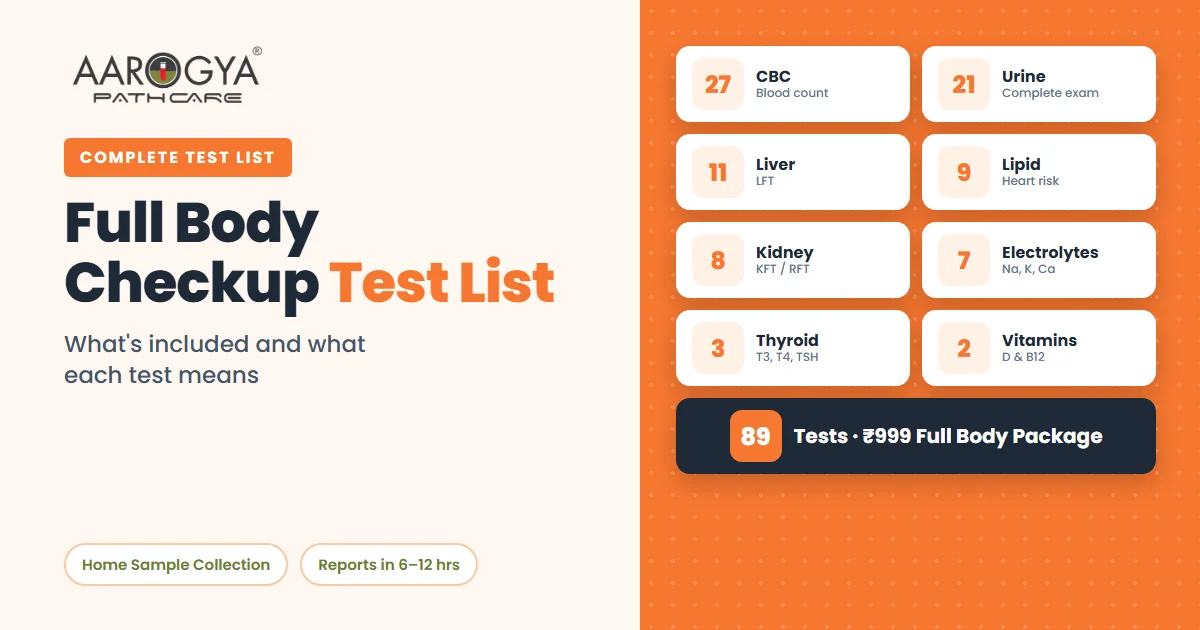
Both vitamins are included in the Aarogya Full Body Package (89 tests, ₹999), so you can check them along with your blood count, sugar, thyroid, liver and kidney in one sample.
Why Vitamin D and B12 matter
- Vitamin D helps your body absorb calcium, keeps bones and muscles strong and supports immunity. Your skin makes it when exposed to sunlight.
- Vitamin B12 helps make red blood cells and keeps your nerves and brain healthy. It comes mainly from foods such as milk, curd, paneer, eggs, fish and meat.
Symptoms of Vitamin D deficiency
- Constant tiredness and low energy
- Bone pain, back pain or joint pain
- Muscle weakness or cramps
- Low mood
- Getting sick often
- Slow healing of wounds
- Hair fall
Symptoms of Vitamin B12 deficiency
- Tiredness and weakness
- Tingling, numbness or a "pins and needles" feeling in hands and feet
- Pale or yellowish skin
- Breathlessness or a fast heartbeat on light activity
- Poor memory or trouble concentrating
- Mouth ulcers or a sore, red tongue
- Low mood or irritability
Many of these symptoms are common and can have other causes, which is why a blood test is the only way to know for sure.
Vitamin D and B12 normal range
| Test | Low (deficient) | Borderline | Normal |
|---|---|---|---|
| Vitamin D (25-OH Vitamin D) | Below 20 ng/mL | 20–29 ng/mL | 30–100 ng/mL |
| Vitamin B12 | Below 200 pg/mL | 200–300 pg/mL | About 300–900 pg/mL |
These are commonly used ranges. Each lab may use slightly different reference ranges – always check the range printed on your own report and discuss the result with your doctor. Very high Vitamin D levels (above 100 ng/mL) can also be harmful, usually from taking too many supplements.
Who should get a Vitamin D and B12 test?
| Who | Why |
|---|---|
| Office workers and people who stay indoors | Little sunlight means less Vitamin D |
| Vegetarians and vegans | B12 comes mainly from animal foods |
| People over 50 | The body absorbs B12 less well with age |
| People taking diabetes medicine (metformin) or acidity medicines for a long time | These can lower B12 absorption |
| Women, especially during pregnancy and after childbirth | Higher needs and common deficiency |
| People with frequent tiredness, body pain or tingling | To find or rule out a deficiency |
Why deficiency is so common in winter in Delhi
In winter, shorter days, fog, pollution and warm clothes that cover most of the skin mean much less sunlight reaches your body. That makes it harder to make Vitamin D, so many people feel more tired and achy during these months. If you have symptoms, winter is a good time to check your levels.
How the test is done
- Both are simple blood tests from a vein in your arm.
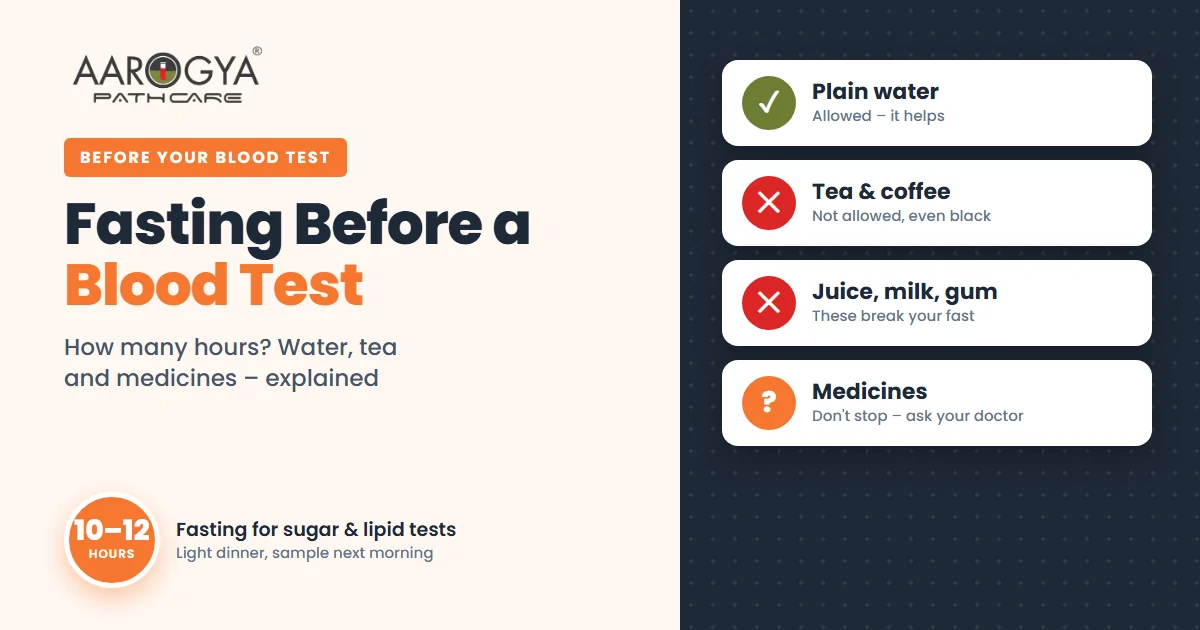
- Fasting is usually not needed for Vitamin D and B12 alone. If you take them as part of a health package, fast for 10–12 hours because the package also includes sugar and lipid tests.
- If you take vitamin supplements, tell the staff when your sample is collected.
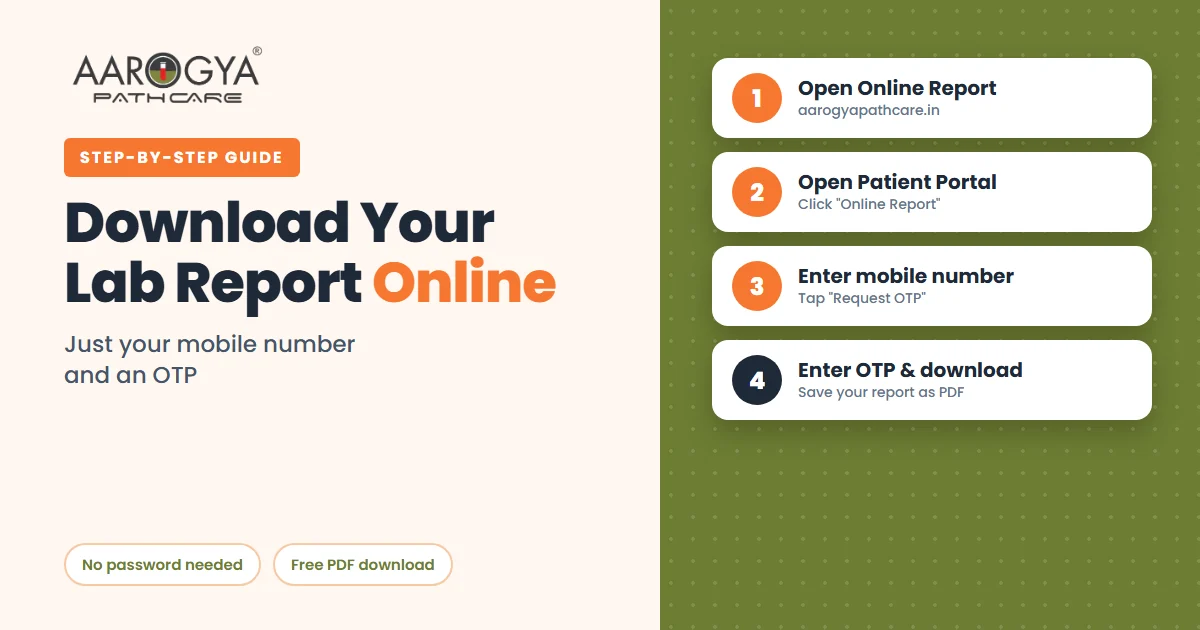
- Aarogya Pathcare offers home sample collection, and you can download your report online.
Which Aarogya packages include Vitamin D and B12?
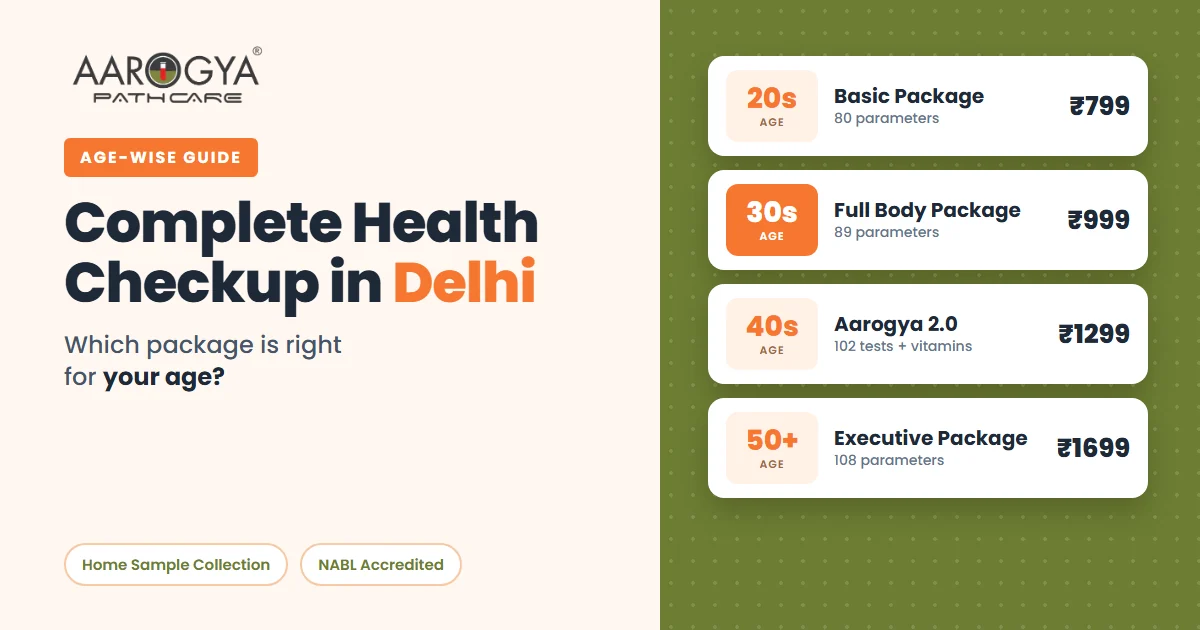
| Package | Tests | Price | Vitamin D & B12 |
|---|---|---|---|
| Aarogya Basic Package | 80 | ₹799 | Not included |
| Aarogya Full Body Package | 89 | ₹999 | Included |
| Aarogya 2.0 Package | 102 | ₹1299 | Included, plus iron (anemia) profile and HbA1c |
| Aarogya Executive Package | 108 | ₹1699 | Included, plus anemia and arthritis screen |
If you often feel tired, the 2.0 Package is a good choice, as it also checks iron levels – low iron (anemia) is another common cause of tiredness. See the full full body checkup test list for details.
What to do if your levels are low
- Show your report to a doctor. They will decide the right dose and duration of supplements.
- Do not take high-dose supplements on your own – too much Vitamin D can be harmful.
- Get safe sunlight when possible, such as 15–20 minutes of morning sun on your arms and face.
- Eat B12-rich foods such as milk, curd, paneer, eggs and fish, if they suit your diet.
- Retest after a few months, as your doctor advises, to check that your levels have improved.
Frequently asked questions
What is the normal range of Vitamin D?
Generally, 30–100 ng/mL is considered sufficient, 20–29 ng/mL insufficient and below 20 ng/mL deficient. Ranges can vary slightly between labs.
What is the normal range of Vitamin B12?
Generally, about 300–900 pg/mL is considered normal, 200–300 pg/mL borderline and below 200 pg/mL low. Check the range on your own report.
Is fasting required for a Vitamin D test?
Usually no. But if the test is part of a health package that includes sugar and lipid tests, you should fast for 10–12 hours.
What are the first signs of low Vitamin B12?
Tiredness, weakness, and tingling or numbness in the hands and feet are often the first signs.
Can Vitamin D deficiency cause hair fall?
Low Vitamin D is linked with hair fall in some people, but hair fall has many causes, including thyroid problems and low iron. A blood test helps find the real cause.
Which package includes Vitamin D and B12 tests?
The Aarogya Full Body Package (₹999), 2.0 Package (₹1299) and Executive Package (₹1699) all include Vitamin D and Vitamin B12.
Book a Full Body Package with Vitamin D and B12 and home sample collection, or call +91-9999857513.
This article is for general information only and is not a substitute for medical advice. Please consult your doctor about your results and treatment.